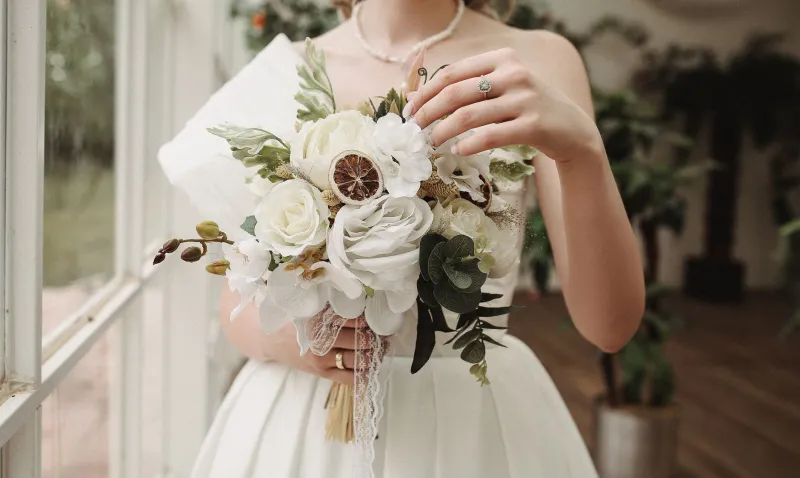
Small Posies, Big Feelings: Building a Victorian Tussie-Mussie for Modern Gifting
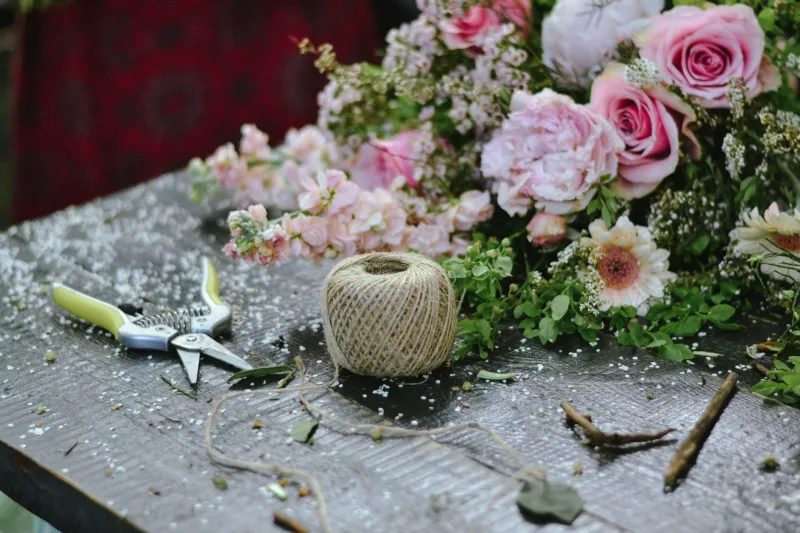
There is something quietly magnetic about a tussie-mussie. It is not the flashiest thing on a florist's bench. It does not demand a huge vase or a dramatic entrance. Instead, it asks to be held close, sniffed properly, and kept long after the last petal drops. For anyone who has ever stood in a supermarket flower aisle feeling slightly underwhelmed by cellophane and dyed carnations, the small Victorian posy offers a welcome alternative: something personal, seasonal and made by hand.
The tussie-mussie is enjoying a revival in the UK, and not because we are all suddenly experts in nineteenth-century etiquette. It is because the format makes sense. It is compact, fragrant, and easy to give. It suits a kitchen table, a bedside, a coat pocket or a handwritten note tucked inside a ribbon. In a world of bigger-is-better bouquets, the tussie-mussie is a gentle reminder that romance often lives in miniature.
What Exactly Is a Tussie-Mussie?
A tussie-mussie is a small, tightly gathered posy, usually no wider than a teacup. Historically, it was carried to ward off bad smells and illness, but by the Victorian era it had become a fashionable accessory — a scented companion for a walk, a ball or a discreet message between friends and sweethearts. The name itself is delightfully old-fashioned, possibly derived from the idea of a bunch of flowers held to the nose.
The format is simple: a few focal blooms, some smaller supporting flowers, fragrant foliage, and a neat wrap of ribbon or lace. What makes it special is not complexity. It is the care in the gathering. A tussie-mussie should feel like a handful of garden, not a scaled-down supermarket bouquet. That is why it suits the way many of us want to give flowers now — thoughtfully, locally, and without a mountain of plastic.
The Victorian Language of Flowers, Minus the Cheesiness
The Victorians assigned meanings to flowers with the enthusiasm of people who had no group chats. Rosemary for remembrance. Lily of the valley for a return of happiness. Forget-me-nots for, well, you can guess. Some meanings are sweet, some are obscure, and quite a few are contradictory depending on which floristry manual you consult. The trick is not to treat the language of flowers like a secret code that must be decoded perfectly. Treat it as a starting point for a more thoughtful gift.
If you are making a posy for a birthday, a few stems of rosemary tucked among the blooms add scent and a quiet message of lasting affection. For an apology, pale roses and soft lavender feel sincere without being overwrought. For a just-because moment, mix in something cheerful and slightly unexpected: a sprig of flowering mint, a tiny dahlia, a stem of scented pelargonium. The recipient does not need to know every historical meaning. They will notice that the flowers feel chosen rather than grabbed.
It helps to think in layers. Choose one or two blooms that carry the main message, then add smaller flowers and foliage for texture. A tussie-mussie should smell good as well as look good, so include something fragrant even if it is just a leaf you rub between your fingers. The scent is half the romance.
Seasonal British Blooms for Your Posy
One of the pleasures of a small posy is that it can change with the calendar. You do not need a dozen imported roses in January. You need whatever is looking generous on a British flower farm or in a responsibly managed garden.
In late winter and early spring, think hellebores with their nodding heads, early daffodils, and the first perfumed narcissi. A few sprigs of winter honeysuckle or daphne, if you can find them, will scent the whole room. March and April bring tulips, honesty and forget-me-nots — lovely for a posy that feels like a breath of fresh air after a long winter.
By May, the garden starts to loosen up. Lily of the valley is a classic tussie-mussie flower, though it is worth handling gently and keeping away from curious pets. Sweet rocket, aquilegia and early roses begin to appear. June is the month for garden roses, sweet peas and scented pinks. A posy of three garden roses, a few sweet peas and a frill of dusty miller is almost impossible to get wrong.
Summer brings lavender, nigella, cornflowers and the first dahlias. By August and September, dahlias are doing the heavy lifting in every colour from peach to deep burgundy. Add a little mint or rosemary for scent. October and November invite chrysanthemums, berries, seed heads and the last of the dahlias. In December, a tussie-mussie of evergreens, a single rose and a few dried orange slices feels festive without tipping into tinsel.
Conditioning and Wrapping: The Florist's Method
Start with clean stems and a clean sharp pair of snips. Strip any leaves that would sit below the binding point, because wet leaves rot and make the posy smell less than romantic. Condition the flowers in deep, cool water for a few hours before you arrange them. This is the unglamorous step that makes the difference between a posy that lasts three days and one that lasts a week.
Build the posy in your hand, not on the table. Hold the first few stems loosely and add each new stem at a slight angle, turning the bunch as you go. Aim for a soft dome rather than a flat disc. Keep the binding point tight but not strangling. Once the shape feels right, tie it with twine or a narrow ribbon. If you are using ribbon, wrap it around the binding point several times and finish with a simple bow that sits to one side rather than dead centre.
For wrapping, choose something that lets the flowers breathe. Brown paper, tissue paper, a square of cotton or a piece of vintage linen all work well. Avoid plastic sleeves. If the posy is a gift, wrap the stems first and then add a wider outer layer, folding the paper into a cone or a simple parcel. Finish with a handwritten tag. The tag matters more than the ribbon.
Gifting Notes: Birthdays, Apologies and Just-Because
For a birthday, make the posy personal. If you know the recipient's favourite colour, lean into it. If they love a particular scent, build around that. A small posy of lavender, rosemary and pale roses for a friend who has had a difficult year will land more softly than a huge bouquet delivered in a box.
For an apology, keep it simple and sincere. Avoid loud colours and novelty additions. Soft pinks, creams, muted greens and a little rosemary will do more work than a grand gesture. Include a note in your own words. The flowers are the opening line; the note is the conversation.
For a just-because moment, let yourself play. A single stem of something unexpected — a tiny sunflower, a sprig of flowering currant, a scented geranium leaf — can make the whole posy feel like a secret. These are the gifts that tend to stay on a windowsill long after the occasion has passed.
A Small Posy, Held Close
The tussie-mussie is not a trend that asks you to buy more. It asks you to choose better, gather thoughtfully, and give something that feels human. In a British flower calendar that is always shifting, it is a format that works from January hellebores to December evergreens. And in a world of oversized gestures, there is something deeply romantic about a posy small enough to hold in one hand.