Before the Order of Service: Flowers for the In-Between Days
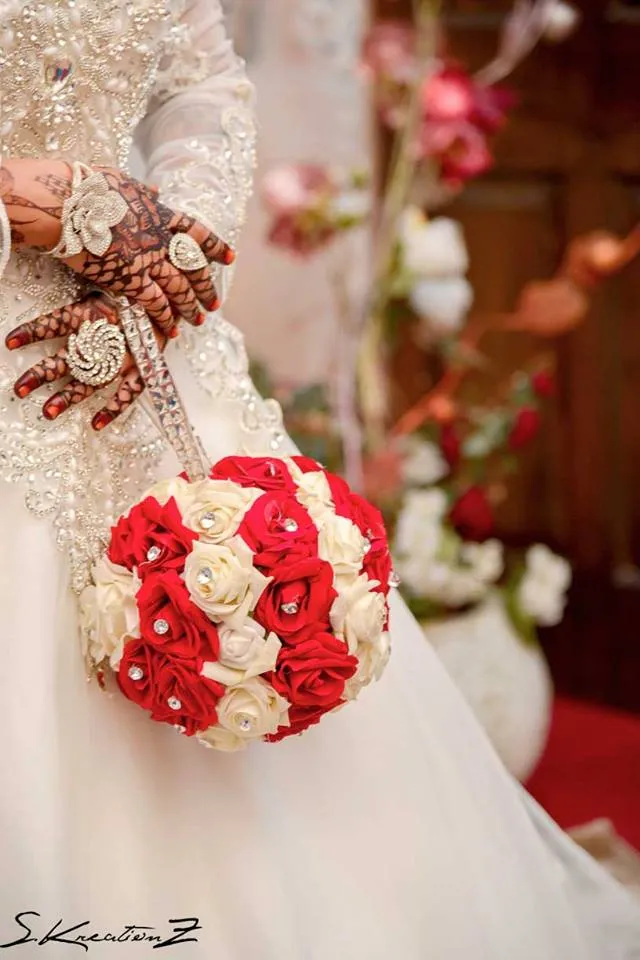
Photo: Sarah Canbel, CC BY-SA 4.0, via Wikimedia Commons
Most sympathy flowers arrive on a schedule. An order of service gets printed, a date gets fixed, and a formal arrangement turns up at the crematorium on the morning of. All well and good — except that the hardest days are usually the ones before that. The week when the hallway is crowded with coats, someone is hunting for a death certificate, and nobody has thought about what's for tea.
That's the window we want to talk about. Not funeral flowers, which have their own rules and their own florist, but the quieter thing you send to the house while someone is still at home in the middle of it all.
Why the first days ask for something different
A funeral arrangement is built for a room it will only see once. It arrives wired into foam, stands on a tripod or a casket, and is designed to be looked at from a distance by a lot of people in dark coats. It does its job beautifully and then it's gone.
What a bereaved household usually needs in the days before that is far less ceremonial. Something that can sit on the draining board. Something that doesn't need rearranging, doesn't shed pollen onto a dark carpet, and doesn't require anyone to find a jug at eleven at night.
There's also a quiet etiquette point here. In the UK, flowers sent to the family home are almost always welcome; flowers sent to the funeral director's premises without checking are more hit-and-miss, and many families now request family flowers only. That request refers to the funeral itself — it isn't a ban on a bunch turning up at the door on Wednesday. If you're unsure, a quick text to a close friend or relative will usually settle it.
A hand-tied bunch, already in water
Our preference, every time, is a simple hand-tied bouquet that arrives with a bit of water and a way to stand up. Not a basket, not a wreath, not a pedestal. Just stems, tied, wrapped, and ready to be dropped into the nearest vase.
Why? Because the person receiving it is likely to be answering the door, making tea, fielding calls and signing things. Anything that comes with instructions is a small extra job. A hand-tied posy is the flower equivalent of someone turning up with a lasagne: no assembly required.
Size matters too. A modest bunch can go on a hall table, a windowsill, or beside the bed in a spare room where a relative is sleeping. An enormous arrangement needs a surface and a statement, and in a house full of people there often isn't room for either.
Stems that behave themselves in a closed-up house
In November, we're working with British chrysanthemums, late rosehips, skimmia, viburnum tinus, ivy, snowberry and whatever foliage is still standing up in the garden. Rosemary is a natural choice — remembrance, obviously, but also because it smells like a kitchen rather than a chapel. Bay, sage and a few dried hydrangea heads do a similar job: soft, muted, and forgiving if nobody changes the water for three days.
A few things we tend to avoid for house flowers. Heavily perfumed lilies, because a warm front room with the curtains drawn and eight visitors in it is not the place for a scent that fills the whole hallway. Anything that drops pollen or petals onto carpet. And anything so structured that it looks like it's already at the funeral — a certain kind of formal, all-white, wired-to-perfection arrangement can feel oddly premature when the date hasn't even been set.
A bit of colour is fine. More than fine, actually. Grief doesn't require a household to live in beige for a fortnight.
What to write on the card
This is where most people freeze, so here's the short version.
Name the person who died. "So sorry about your dad" lands differently from "thinking of you at this awful time". If you knew them, say one specific thing — a memory, a habit, the fact that she always had the good biscuits in. Specificity is a kindness, because it proves you're remembering a person and not just a situation.
Avoid instructions. "Stay strong", "at least she's at peace", "everything happens for a reason" and "let me know if you need anything" are all well-meant and all slightly heavy to receive. If you want to help, offer something concrete: "I'll drop a meal round on Thursday, no need to answer the door."
And sign it properly. A first name and a surname, especially if you're a colleague or a neighbour from three doors down. There will be a lot of cards and nobody will be at their sharpest.
Sending with care
A couple of practical notes from behind the counter. If you're sending to the house, aim for mid-morning to mid-afternoon — not the evening, and not the hour before the funeral, when everyone is trying to find a second pair of black shoes. If nobody's answering, a good courier will try a neighbour; a good florist will tell you if the address is tricky.
Include a vase if you can. It sounds small. In a house where the cupboards have been rearranged to fit four extra people, it isn't.
The long view
Funeral flowers mark a day. House flowers mark the days around it — the ones that don't have a ceremony to hold them together. A modest British bunch on the kitchen table, changed once, maybe twice, is a reminder that someone outside the front door is thinking of them. That's not a small thing in the in-between.
And when the funeral is over, when the wreaths have gone and the house has gone quiet again, that's usually the moment a second bunch matters most. But that's a letter for another week.