A Letterbox Full of Summer: Posting British Flowers That Arrive Happy
Posted flowers have a reputation problem. They arrive crushed, thirsty, or looking like they have seen the inside of a sorting office. But a letterbox posy can be one of the most romantic things you send: a small, hand-tied bunch that asks the recipient to slow down, trim the stems and find a vase. At Tussie Mussie Flowers, we think of it as a letter with a heartbeat. The trick is to work with the post, not against it.
Why a posted posy still matters
Same-day couriers are lovely. They are also expensive, carefully scheduled and often arrive while someone is out. A posted posy has a different kind of anticipation. It drops through the door with the bills and the charity leaflets, and suddenly the doormat looks like a better place. The recipient gets to unwrap it themselves, which is half the pleasure. There is something quietly British about it too: a bunch of stems, a handwritten note, and the trust that the postal system will do its bit.
Our name comes from the tussie-mussie, the small nosegay carried for scent and sentiment. Those little bunches were never meant to be grand. They were meant to be personal. A posted posy belongs in that tradition. It is not a statement arrangement; it is a message with petals.
Pick stems with good posture
The first rule of posting flowers is to choose stems that can hold themselves up after a day in a box. Think firm stems, tight buds and foliage that does not sulk. Delicate, papery blooms such as sweet peas and cosmos are beautiful in a garden, but they bruise easily in transit. Save them for a hand-delivered bunch.
Good travellers include chrysanthemums, sweet william, cornflowers, scabiosa, calendula, asters and sedum. Rosemary, bay, lavender and sturdy grasses add scent and structure without demanding much water. Seed heads and dried stems can be lovely too, especially in autumn, but keep them away from damp wrapping.
A florist’s trick is to condition stems for at least twelve hours before packing. Cut them at an angle, strip the lower leaves, and let them drink. A stem that has had a good drink travels far better than one that was cut in a hurry. If you are picking from your own garden, do it in the cool of the morning and plunge the stems into water straight away.
A seasonal shortlist for the post
In spring, look to narcissi, wallflowers and early tulips. Tulips are tricky because they continue to grow in the box, but a tight bud bunch can work if you wrap the stems firmly and warn the recipient to expect a little movement. In summer, sweet william, cornflowers, scabiosa and calendula are reliable. They have a cottage-garden softness that suits a posted posy, and they recover well from a short journey.
Autumn is arguably the best season for posting. Chrysanthemums, asters, sedum and grasses are made of sterner stuff. Add a few rosehips or seed heads for texture. In winter, think foliage first: rosemary, ivy, bay, snowberry and evergreen clippings. Hellebores are too fragile to post, but a few winter stems and a ribbon can still feel generous.
Wrap for travel, not for show
The wrapping has one job: to keep the stems hydrated without turning the box into a swamp. Soak a piece of newspaper or a small cloth, wring it out well, and wrap it around the stem ends. Secure it with twine, then wrap the whole bunch in wax paper or tissue. Avoid sealing damp stems in plastic for long periods; condensation can encourage mould. A paper wrap that breathes is kinder.
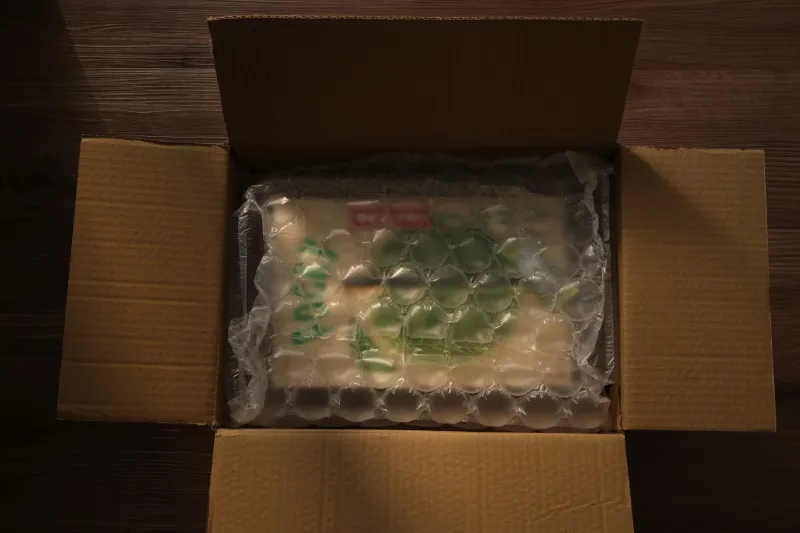
Cushion the blooms with tissue or recycled paper so they cannot knock against the sides of the box. Keep the bouquet compact. A loose, airy bunch looks lovely in a vase but rattles around in transit. Tie it firmly enough to hold its shape, but not so tightly that the stems are crushed. Add a small care card: trim, change the water, keep away from direct heat. It is a small thing, but it makes the recipient feel looked after.
The box, the slot and the sorting office
If you want the posy to go through a letterbox, choose a box that will actually fit. Royal Mail large-letter limits are roughly 35cm by 25cm by 2.5cm, though most flowers need a little more depth than that. Check the recipient’s letterbox before you promise a drop-through delivery. If in doubt, send it as a small parcel and tell them to expect a knock at the door.
Use a rigid box rather than a soft envelope. Write the address clearly, include a return address, and choose a tracked service if the flowers are for a special day. Mark the box as fragile, but do not rely on the label alone. Good packing is the real protection.
Timing: the quiet art of posting on a Monday
Post early in the week. A Monday or Tuesday posting gives the posy the best chance of arriving before the weekend, when sorting offices and doorsteps are quieter. Avoid bank holidays, extreme heat and hard frosts. In summer, choose a foliage-heavy bunch and post it early. In winter, protect the box from frost with an extra layer of paper, and avoid sending tender stems when snow is forecast.
It also helps to tell the recipient when to look out for it. A posted posy is a small event. Half the romance is the waiting.
The note that makes it a gift
Finally, write something. A posted posy without a note is just flowers in a box. With a few lines, it becomes a letter you can hold. Keep it simple: what you noticed, what you remembered, what you hope the week brings. Tuck the note inside the wrap so it is the first thing they see. If you want to be very traditional, add a single pressed flower or a sprig of rosemary for remembrance.
A letterbox bouquet will never look as though it has come straight from the garden. That is not the point. It looks loved, a little travelled, and entirely personal. Choose stems that can take the journey, wrap them with care, and send them on a day when the post has a fair chance. Then let the doormat do the rest.