What's Growing When: A Florist's Romantic Almanac of British Flowers
At Tussie Mussie Flowers, we plan bouquets the way some people plan dinner: by looking at what is actually growing. British flowers are not a switch that flips on in May and off in October. There is something worth asking for in every month — and something worth waiting for. Here is our florist-led almanac for 2026, with notes on what to request, how to build a bouquet around it, and where the romantic opportunities sit.
January and February: The Quiet, Structural Months
This is not the season to demand a British rose and expect a happy answer. It is the season for hellebores, snowdrops, pussy willow, forced bulbs and evergreen foliage. Ask your florist for British-grown hellebores, skimmia, ivy and berried branches. The mood is quieter and more sculptural: a hand-tied posy of hellebores and foliage can feel far more personal than a dozen imported red roses.
For Valentine's, be honest with your florist. British roses in February are a rarity. Ask for a design that uses the best imported roses alongside British foliage, willow or forced bulbs, and you will get something with texture and scent rather than a standard box of stems. For winter weddings, ask about candlelight-friendly foliage, dried seedheads and generous evergreen. It is the season for atmosphere over abundance.
March and April: The First Real Rush
Daffodils, narcissi, tulips, ranunculus, anemones and blossom arrive like a deep breath. Ask for British tulips and scented narcissi by name — the difference between a supermarket bunch and a grower's bunch is often the scent. This is the season for Mothering Sunday posies, Easter table flowers and the first properly romantic wedding bouquets of the year.
If you are ordering for a wedding, ask your florist which British stems are likely to be at their peak in your week, not just your month. Anemones and ranunculus are glorious but short-lived; a good florist will build the recipe around what will be strongest on the day, then use foliage and blossom to carry the mood.
May and June: The Romantic Peak
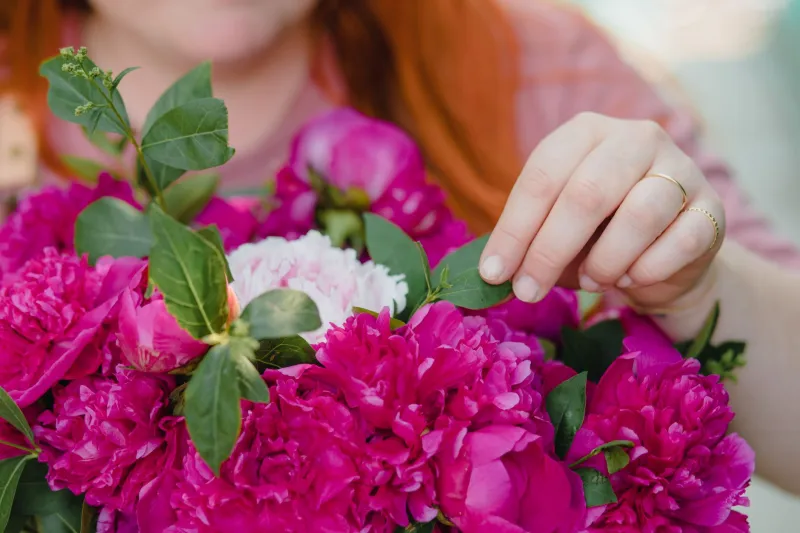
Peonies, bearded iris, alliums, sweet peas, cornflowers, nigella and elderflower. This is the florist's favourite stretch of the year, and the one most likely to make a bouquet feel effortless. Ask for British peonies and sweet peas, and ask your florist to work with the week's peak rather than a photograph from three years ago. Peony season is short; sweet peas are fragile; both are worth organising your plans around.
For weddings, this is the classic British romantic window. Ask about garden roses, sweet peas in posies, and loose, seasonal arrangements that look as though they were gathered rather than manufactured. For gifts, a simple jam-jar bouquet of sweet peas and nigella says more than a stiff arrangement of imported blooms.
July and August: Abundance, Handled Lightly
Lavender, dahlias, cosmos, scabiosa, sunflowers, garden roses and herbs. The British cut-flower year is at its most generous now, and the temptation is to overfill. Ask for British dahlias, cosmos and scented herbs, then let the bouquet breathe. A jug of dahlias on a kitchen table is one of the great seasonal pleasures.
This is also a lovely time for relaxed weddings: ask your florist about table arrangements that can be moved to a breakfast table the next day, and about herbs that add scent without competing with the food. For gifts, ask for a scented, garden-gathered look rather than a formal dome. The season does most of the work.
September and October: The Turning
Dahlias are still going, but chrysanthemums, hydrangeas, berries, seedheads and grasses start to take over. Ask for British chrysanthemums — the sprays grown here are a world away from the stiff button blooms of reputation — along with rosehips, hips and textured foliage. The palette shifts to bronze, plum, ochre and green.
For autumn weddings, ask your florist about texture and movement: grasses, burnt-orange dahlias, berried branches and candle-friendly tones. For gifts, a bouquet with seedheads and berries feels like a proper marker of the season. This is also the moment to ask about dried elements for later in the year, if you like that looser, longer-lasting look.
November and December: The Warmth Within
Hellebores return, along with paperwhites, winter foliage, berried ivy, holly and pine. Ask for British evergreen and berried branches where possible, then let imported amaryllis or a few forced bulbs be the accent. Christmas flowers should feel gathered, not factory-made: a generous hand-tied bunch of foliage and berries, or a small posy of hellebores for the table, will often beat a vast arrangement.
For winter weddings, ask about foliage-heavy designs, candles, and flowers that can handle a cold church or a draughty marquee. For gifts, ask your florist for something that will last beyond the day: a planted bulb bowl, a wreath, or a bouquet built on woody stems.
What to Ask For, Wherever You Are in the Year
Start with three questions. Where was this grown? What is at its peak this week? Can you make it British where possible? A good florist will not be offended by any of them. Ask for scent as well as colour, and ask for conditioning advice — how to trim, when to change the water, and which stems are thirsty. If you are ordering a gift, ask for a stem count or a size reference rather than simply trusting a photograph.
For weddings, ask about seasonality early. Give your florist a mood rather than a rigid list of varieties, and trust them to substitute when the growing season has other ideas. The best bouquets are not checklists. They are conversations between what you love and what the year is doing.
In 2026, make that the question: not 'what can I have?' but 'what is lovely this week?' The answer is usually more romantic than a catalogue.