Hellebores After Dark: A British-Grown Winter Bouquet Guide for 2026
Winter is not the off-season
There is a particular sort of beauty to a British winter bouquet. It is not the shouty beauty of a July rose or the sugar-pink optimism of peonies in June. It is quieter than that. It is a hellebore nodding under a hedge, a snowdrop pushing through cold soil, a handful of rosemary that smells like Sunday lunch and memory. As we head into the 2026 winter season, we would rather lean into that than pretend it is still summer.
At Tussie Mussie Flowers, winter arrangements are not a compromise. They are a chance to work with growers who understand cold weather, and to make something that feels warm in a room even when the light has gone by four o'clock.
The British-grown cast: hellebores, snowdrops and the quiet heroes
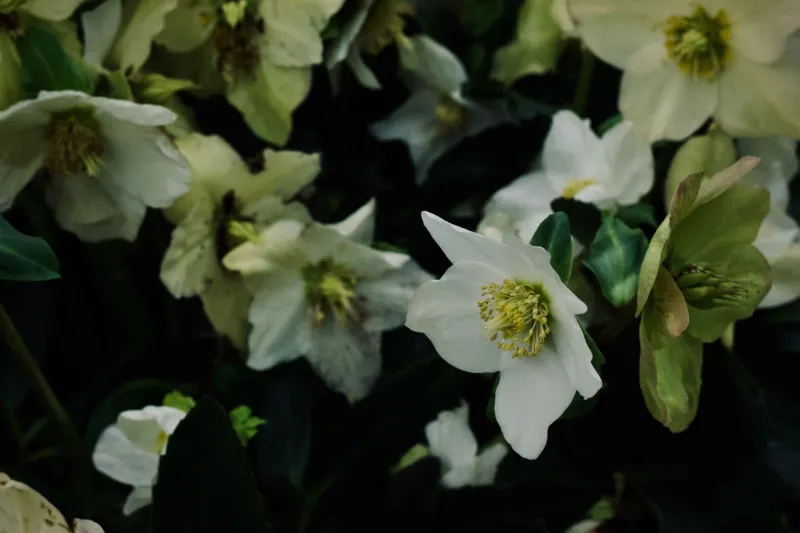
Hellebores are the stars of the winter bouquet, and deservedly so. Also known as Lenten roses, they appear in British gardens and polytunnels in the darkest weeks of the year. Their colours range from creamy white and palest pink to deep plum and near-black. Some are double, some are single, and all of them have a slightly old-fashioned, head-down modesty that makes them feel like a secret. Buy them with buds as well as open flowers and they will reward you for longer.
Snowdrops are smaller and more fleeting, but they carry an enormous amount of feeling. A few stems in a tiny posy can say more than a dozen imported roses. They are best enjoyed in a small vase or a hand-tied bunch, where you can see the delicate white bells properly. British growers often lift and divide them in the green, so ask your florist where they have come from if you are buying in January or February.
Then there is the supporting cast: evergreen foliage such as ivy, bay, yew, holly and rosemary. These give a winter bouquet its structure and its staying power. Add birch twigs, willow or a little dried seed head for texture. Berries can be beautiful, but keep them away from small children and curious pets, and ask your florist which ones are safe for the setting.
Styling for dark evenings
Winter light is not the enemy. It is simply a different sort of lighting, and a winter bouquet can be designed for it. Think about contrast. Pale ivory hellebores and snowdrops will catch the glow of a candle or a string of fairy lights. Deep plum, aubergine and forest green will absorb the light and make the room feel cosier. Mixing the two is where the magic happens.
For a table, a low bowl of hellebores, ivy and rosemary looks generous without blocking conversation. For a hallway or windowsill, a hand-tied bunch in a simple ceramic jug feels relaxed and personal. If you are styling for a Christmas dinner, place a few small posies along the table instead of one enormous centrepiece. It means everyone gets a little piece of the garden, and it is much easier to move when the plates come out.
Ribbon matters more in winter than at any other time of year. A wide velvet ribbon in moss green, oxblood or dusty blue adds a layer of warmth and looks lovely against evergreen foliage. Keep the stems visible. A winter bouquet should look as if it has been gathered, not manufactured.
A bouquet that holds its own in January
January birthdays can feel a bit overlooked after the sparkle of Christmas, which is exactly why they deserve something thoughtful. A small posy of snowdrops, hellebores and rosemary is a beautiful birth-flower nod. Snowdrop is one of the traditional January birth flowers, and rosemary brings scent and a sense of remembrance. Pair it with a handwritten note, a beeswax candle or a jar of local honey and you have a gift that feels considered rather than last-minute.
For Christmas, the same principle applies. Instead of a generic bouquet, think about how the flowers will be used. A table centre for Christmas Eve, a posy for a neighbour who will be on their own, a wreath for a front door that needs a little cheer. If you are giving flowers alongside a present, choose a vase or jug that the recipient can keep. It makes the gift last longer than the blooms.
Practical care for winter stems
Winter flowers are hardy, but they still need a little kindness. Trim stems at an angle with a sharp knife or snips, use a clean vase and cool water, and keep the arrangement away from radiators and direct heat. Hellebores can be thirsty, so check the water every couple of days. Snowdrops are fleeting; enjoy them while they last rather than expecting them to behave like carnations. Evergreen foliage will usually outlast the flowers, which is part of its charm.
Why local growers matter in the cold months
Buying British-grown winter flowers supports growers who are working with the season rather than fighting it. It also means shorter journeys and fresher stems. You will find hellebores and snowdrops at farmers' markets, through local florists and from growers who sell direct. Ask questions. A good florist will be happy to tell you what is British, what is seasonal and what has been flown in.
Winter bouquets are not a compromise. They are a different kind of romance: quiet, textural and close to home. And in a dark month, that might be exactly what we need.