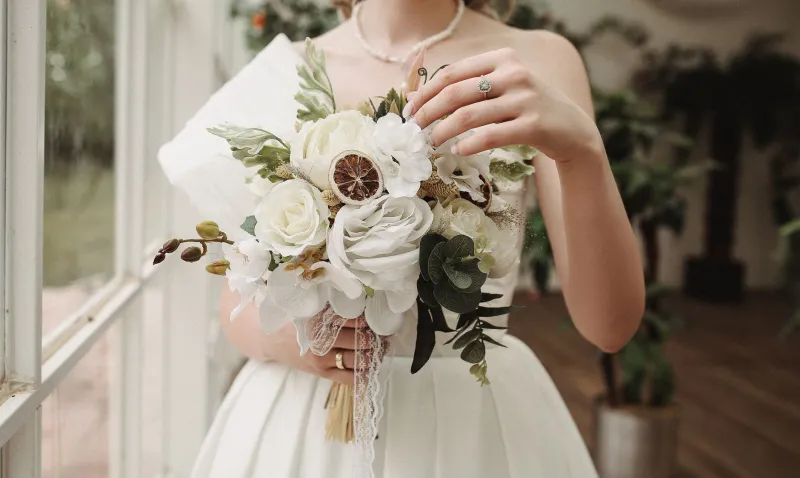
Pinned and Present: Buttonholes for the Groom's Side of the Aisle
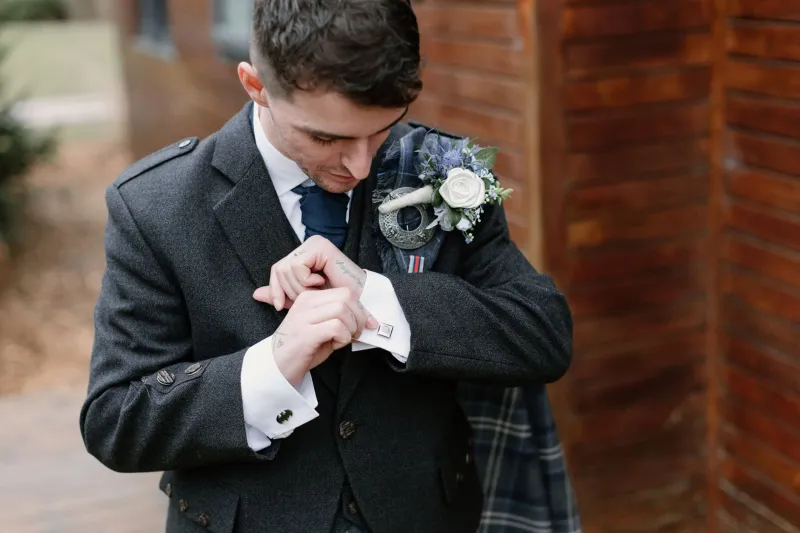
Of all the flowers at a wedding, the buttonhole gets the least planning and the most exposure. It is pinned to a lapel before the register office, hugged by a grandmother by lunchtime, photographed in a marquee through the afternoon and still expected to look like something during the speeches. It is a small piece of floristry with a very long day ahead of it.
That is why the buttonhole deserves a proper conversation. Not a florid one, not a lecture on the language of flowers, just a practical chat about stems, pins and the quiet business of keeping a small flower upright when everything around it is moving.
Start with a stem that can handle a queue at the bar
A buttonhole has no water source. That is the first fact of the day. Whatever you choose has to be able to sit out of water for six, eight or ten hours and still look as if it meant to be there. British-grown flowers are wonderful, but not all of them are built for a lapel.
The reliable ones are usually the ones with a bit of backbone. Rosemary is the quiet hero of the groom's side: fragrant, structured, and happy to hold its shape. Bay and thyme work in the same way. Lavender is lovely in high summer, especially for a relaxed or outdoor wedding, though it can droop in heat. Scabiosa, astrantia and small spray roses are good flower choices, and nigella seed pods or honesty bring texture without fragility. In winter, skimmia, ivy, hypericum berries and small sprigs of winter jasmine can look handsome and sturdy.
The ones I would treat with caution are the beauties with tissue-paper petals: sweet peas, cornflowers, poppies and anything that looks as if it is already thinking about lunch. Hellebores are gorgeous, but they are thirsty flowers. A hellebore buttonhole is a gamble unless it is a cool winter day and someone is prepared to keep it in a box until the last possible moment.
The six-hour test you can do at home
If you are unsure about a stem, give it a trial run. Condition it overnight as you would normally, then leave it on a saucer in a warm room for six hours. See what happens. A buttonhole that fails on a Tuesday afternoon will fail in a heated marquee.
This is also a good test for the whole construction, not just the flower. A heavy stem needs wiring and taping so it does not swing about. A delicate stem needs a lighter pin. A buttonhole is a tiny piece of engineering, and the romance only works if the engineering does.
Pin it where a handshake happens
The classic position is the left lapel, stem pointing down, the flower sitting just below the notch of the collar. Too high and it starts to look like a corsage; too low and it disappears into the pocket. A useful guide is handshake height: when someone reaches for the groom's hand, the buttonhole should be roughly in their eyeline, not up by his ear.
Use two pins if the fabric will take them. One pin through the stem at a slight diagonal, catching the fabric behind; a second lower down for security. Keep the pins hidden. Do not pin through the flower head. If the suit has a working lapel buttonhole, you can use it with a small loop of floristry wire or a purpose-made loop, which looks very smart, but test it first. A buttonhole that has been threaded through a real buttonhole and then refuses to sit flat is a small tragedy at 8.45am.
Wool and tweed hold pins better than silk or a very fine suit cloth. If the lapel is heavy, make the stem sturdier. If the lapel is delicate, keep the buttonhole light. And please do not hand a pin to an usher who has already had a glass of something and is standing near a car.
Echo the bouquet, do not clone it
The bridal bouquet is the big gesture. The buttonhole is the echo. Pick one or two notes from the bouquet and repeat them quietly: the same rosemary, a spray rose in the same colour family, a seed pod that picks up the texture of the bride's flowers. That is enough.
Groomsmen do not need to be identical to the groom. A smaller version, or a single sprig of foliage, keeps the group looking related without turning the photographs into a matching set. Fathers can wear something quieter again: a little foliage, a berry, a single small bloom. The goal is a family of buttonholes, not a uniform.
Weather, wardrobes and the last hour
British weather is its own wedding planner. In rain, choose rosemary, berries and foliage over anything papery. In heat, keep the buttonholes in the fridge until the last moment and do not leave them in a hot car while someone collects the rings. In cold, a buttonhole is usually fine, but a very fragile flower will still bruise if it is shoved into a coat pocket.
It is worth making a spare. Not a whole second wedding, just one extra buttonhole in a small box with a piece of damp kitchen roll. Give it to the best man or the person who is most likely to be standing near the groom when something goes wrong. It is not romantic. It is deeply practical.
Every photograph will find it
The buttonhole is in every group shot, every hug, every confetti moment and every slightly blurry picture taken by an uncle who has discovered the portrait mode. A drooping flower reads as a long day. A neat one reads as care.
So check it before the ceremony, after the confetti and before the speeches. It is a small thing, but it is the one that stays close to the person all day. Pinned properly, chosen with a bit of nerve, it does more than decorate a lapel. It quietly says that someone thought about the small details, too.